What Is Publicly Known About tk999 So Far
This article exists for one reason: to separate what can be confirmed about tk999 from what remains unclear. There is no shortage of commentary about online betting platforms aimed at Bangladeshi users, but much of it blends marketing language with assumption. The goal here is narrower and more useful. It is to lay out the verifiable details first, then list the questions that a careful reader would still want answered, and finally explain how anyone can check the claims independently rather than relying on secondhand summaries.
The subject is a platform that describes itself as a trusted online betting service for Bangladesh. That description comes from the platform’s own public materials, which is an important distinction. Self-description is a starting point for reporting, not a conclusion. With that caveat stated up front, the confirmed details are still worth setting out clearly, because they define the basic shape of what tk999 is and who it appears to serve.
Confirmed Details About the Platform
The most concrete facts concern identity and purpose. tk999 presents itself as an online betting and gaming platform, and its public-facing materials are built around that single function. It is not a news site, a comparison portal, or a general entertainment brand. The core offering is access to betting and gaming activities through a digital interface.
The second confirmed element is the target audience. The platform’s materials are oriented toward users in Bangladesh. That orientation shows up in the language used, the currency references, and the overall framing of the service. For a reader trying to understand the platform’s positioning, this matters: tk999 is not presented as a global, region-neutral product. It is presented as something built with a Bangladeshi user base in mind.
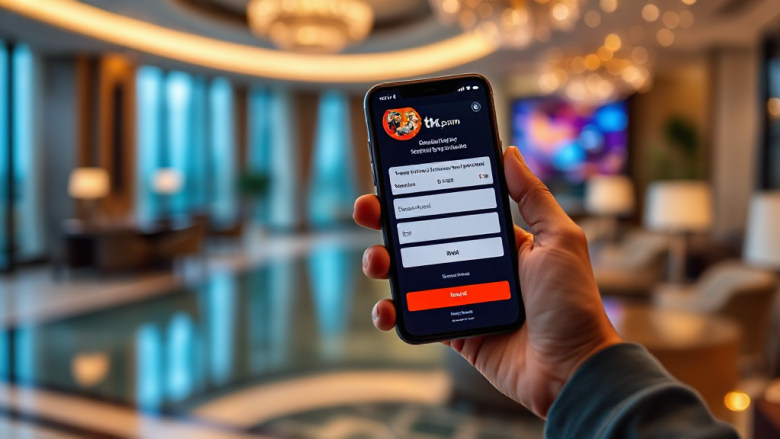
The third confirmed element is the access model. The platform offers a registration process, meaning users are expected to create an account before using the service. Alongside registration, there is a downloadable app. The existence of a dedicated app is a meaningful detail because it tells us the platform treats mobile access as central rather than optional. For a market where smartphone use is the primary way many people go online, that design choice is consistent with the audience it targets.
These three points — platform type, audience, and access model — form the backbone of what is publicly established. Everything else tends to fall into one of two categories: details that require verification, or claims that come from promotional material rather than independent observation.
Open Questions That Remain Unresolved
The first open question concerns licensing and regulatory status. Online betting sits in a complicated legal space in many jurisdictions, and Bangladesh is no exception. Public materials from the platform describe it as trusted, but trust is a claim, not a credential. A reader would reasonably want to know which authority, if any, issues or oversees the platform’s operations, and what that oversight actually covers. As of the available public information, this is not something that can be confirmed from neutral sources.
The second open question concerns payment handling. The platform supports transactions related to gaming activity, but the specifics — which payment methods are accepted, how deposits and withdrawals are processed, what fees or limits apply, and how long transfers take — are the kind of operational details that matter enormously to users and are rarely fully documented in public summaries. Anyone considering the platform would need to check these directly rather than assume them.
The third open question concerns the app itself. A downloadable app exists, but public information does not clearly establish where it is distributed, what permissions it requests, how often it is updated, or how it handles user data. These are standard questions for any mobile application that involves account access and financial transactions, and they remain open here.
The fourth open question concerns user outcomes. There is no reliable public record of how the platform performs in practice — how quickly support responds, how disputes are handled, or whether the experience matches the promotional description. Reviews and forum posts exist for almost every platform in this space, but their reliability varies widely, and they should be treated as anecdote rather than evidence.
None of these gaps are unusual. Most online betting platforms keep operational details close, and independent reporting on the sector is thin. The honest position is that the confirmed details are limited, and the unresolved questions are substantial.
How to Verify Claims Independently
Verification starts with primary sources. The platform’s own website is the first place to look, not because it is neutral, but because it is the authoritative source for what the platform says about itself. Terms and conditions, privacy policies, and any published licensing information are the documents that matter most. If a claim about regulation or payment handling cannot be traced back to a written policy, it should be treated as unconfirmed.
The second step is to check the app through official channels. If an application is distributed through a recognized app store, the store listing provides useful signals: developer identity, update history, permission requests, and user feedback. If distribution happens outside those channels, that itself is information a reader should weigh carefully.
The third step is to look for independent coverage rather than promotional content. Articles that repeat a platform’s marketing language without attribution are not verification. Reporting that names sources, cites documents, or describes firsthand testing carries more weight. Where no such coverage exists, the correct conclusion is that the claim is unverified, not that it is false.
The fourth step is to test small and observe. For any platform involving account registration and transactions, the practical way to evaluate reliability is to start with minimal exposure, document what happens, and check whether the experience matches the published terms. This is not a recommendation to use the service; it is simply the method any cautious person would apply to an unfamiliar platform.
Finally, it helps to keep a clear line between what a platform says and what can be shown. Descriptions like “trusted” or “secure” are positioning statements. They become facts only when backed by verifiable documentation or independent observation. Readers who maintain that distinction will avoid most of the confusion that surrounds this sector.
What the Current Picture Suggests
Pulling the threads together, the public picture of tk999 is clear in outline and thin in detail. It is an online betting and gaming platform aimed at users in Bangladesh, with a registration process and a downloadable app forming the core access path. Those elements are consistent across the platform’s own materials and define its basic identity.
Beyond that outline, much remains open. Licensing, payment mechanics, app distribution, data handling, and real-world user experience are all areas where public information is either absent or unverified. That is not a criticism specific to this platform; it reflects how little independent scrutiny most platforms in this space receive.
For a reader who wants a neutral account rather than advice, the practical takeaway is straightforward. Treat the confirmed details as a starting framework, treat the open questions as genuinely open, and verify anything that matters through primary sources before acting on it. The purpose of this summary was never to promote or condemn, but to mark the boundary between what is known and what is not. That boundary is the most honest thing any report on a platform like this can offer.